Does homeowners insurance cover tree removal in Georgia?
Does homeowners insurance cover tree removal in Georgia? We break down what's covered, what's not, deductibles, and how to file a claim after a storm.
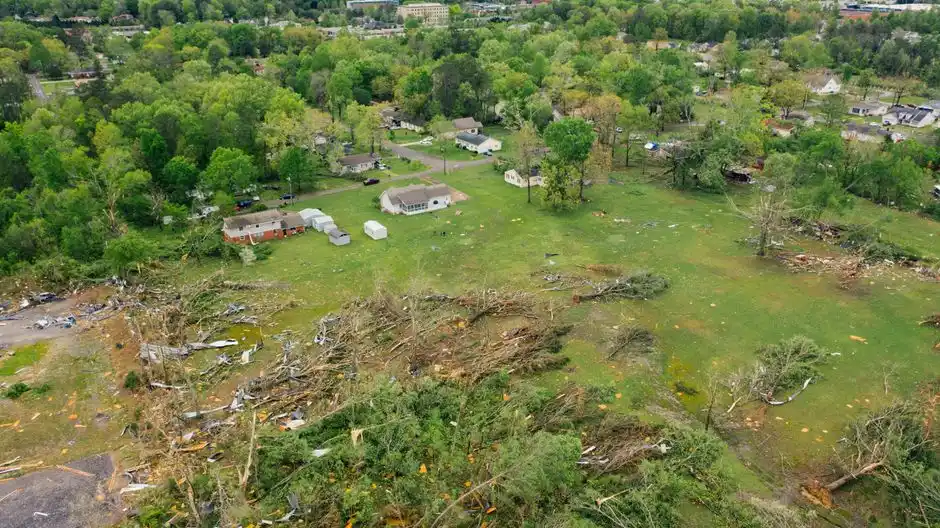
Yes, homeowners insurance in Georgia typically covers tree removal when a fallen tree hits your house, garage, fence, or another covered structure. It also usually pays to remove a tree that blocks your driveway or ramp after a storm, even if the tree itself didn't damage anything. The coverage is real, but the rules are specific - and the difference between a paid claim and a denied one almost always comes down to where the tree landed and why it fell. Below, we walk through exactly what Georgia policies cover, what they exclude, how to file a claim that gets approved, and when it makes more sense to call us instead of your adjuster.
The short answer: when insurance pays and when it doesn't
Does homeowners insurance cover tree removal in Georgia is a question with a two-part answer: it covers removal when the tree damages a covered structure, and it covers removal when the tree blocks a driveway, ramp, or handicap access point - even without structural damage. Everything else usually comes out of your pocket. A tree that falls in the middle of your yard and touches nothing is almost never covered. That's the line.
Most Georgia policies follow HO-3 or HO-5 forms, which cover "sudden and accidental" damage from wind, hail, lightning, and the weight of ice or snow. A healthy pine that blows over in a 60 mph gust during a summer thunderstorm is a covered event. A pine that's been dead for two years and finally drops is not - that's a maintenance issue, and insurers treat it that way.
Here's the practical breakdown we give homeowners every week:
- Covered: Tree hits your roof, wall, garage, shed, fence, pool cage, or HVAC unit.
- Covered: Tree blocks your driveway, a ramp, or a handicap access point - even if nothing is damaged.
- Usually covered: Tree removal costs up to a policy limit, often $500 to $1,000 per tree and $2,000 to $3,000 total.
- Not covered: Tree falls in the open yard and damages nothing.
- Not covered: Tree was dead, diseased, or obviously leaning before the storm.
- Not covered: Tree removal as preventive maintenance before any damage occurs.
If you need help right now - tree on the house, tree across the driveway, water pouring through a cracked ceiling - call a pro first and sort out the claim later. We handle Emergency Tree Removal in Georgia around the clock, and we document everything your adjuster will ask for.
When will insurance pay for tree removal in Georgia?
Insurance pays for tree removal in Georgia when the tree causes damage to a covered structure or blocks access to your home. The trigger is damage or blockage, not the simple fact that a tree came down. A 40-foot oak that lands on your back deck is a claim. The same oak that lands beside the deck and misses it by three feet is not.
Georgia's storm patterns matter here. From June through September, afternoon thunderstorms routinely push 50 to 70 mph straight-line winds through the metro Atlanta corridor, and the National Weather Service issues severe thunderstorm warnings for north Georgia dozens of times each summer. Those events generate the bulk of the tree-damage claims we see. In October and November, the risk shifts: saturated soil from fall rains plus early leaf drop makes tall pines and water oaks more likely to uproot, especially in older neighborhoods where the canopy is dense.
Three conditions have to line up for a standard claim:
- The tree damaged a covered structure. Your dwelling, other structures (fence, shed, detached garage), and personal property are all typically covered.
- The cause was sudden. Wind, lightning, hail, ice, or the weight of snow. Gradual decline doesn't qualify.
- The tree wasn't already a known hazard. If you had a dead tree leaning toward the house and did nothing, the insurer can argue you should have handled it.
One more thing worth knowing: if your neighbor's tree falls on your house, you file with your own insurer, not theirs. Your policy pays, your deductible applies, and your insurer may pursue your neighbor's carrier later. That surprises a lot of people. We see it constantly in Emergency Tree Removal in Atlanta, where mature hardwoods sit close to property lines and one storm can put a tree across two yards.
What is not covered for tree removal in Georgia
What is not covered for tree removal in Georgia is any tree that falls without damaging a structure or blocking access - plus anything the insurer can trace to neglect. That second category is where most denials come from, and it's the one homeowners can actually control.
These are the exclusions we see most often:
- Tree down in the open yard. Removal is your responsibility. In metro Atlanta, that runs $400 to $1,200 for a medium pine or oak, more if it's near a fence or power line.
- Dead or diseased trees. If a tree was visibly dead, dropping limbs, or leaning before the storm, insurers call it deferred maintenance. Removal is on you.
- Preventive removal. Taking down a healthy tree because you're worried about it isn't a claim. That's a planned expense.
- Stump grinding and hauling. Many policies cover removal of the tree itself but not the stump. Stump grinding in Georgia typically adds $150 to $400 per stump.
- Landscaping and plants. Shrubs, flower beds, and lawn repair are usually capped at a small sub-limit - often $500 - or excluded entirely.
- Tree removal on rental or vacant property. If the home isn't your primary residence, a standard HO-3 may not respond the same way.
If a tree is dead, leaning, or dropping limbs, don't wait for the storm to make the decision for you. We handle Hazardous Tree Removal in Georgia before it becomes a claim - and before it becomes a hole in your roof.
How to file a tree removal insurance claim in Georgia
How to file a tree removal insurance claim in Georgia comes down to five steps, and the order matters more than most people realize. Document first, remove second, and never throw away the evidence until the adjuster has seen it.
- Make sure everyone is safe. If a tree is on the house or touching a power line, get out and call 911. Don't go near a downed line - assume it's live.
- Photograph everything before you move anything. Wide shots of the tree and the damage, close-ups of the impact point, and a shot that shows the tree's position relative to the house. Timestamped phone photos are fine.
- Call your insurer and open the claim. Most Georgia carriers let you file online or through an app. You'll get a claim number and, usually, an adjuster assigned within 24 to 72 hours.
- Get the tree off the structure. This is where you call us. We tarp, brace, and remove the tree so the damage stops getting worse. Keep every invoice - the removal cost is part of the claim.
- Meet the adjuster and submit your documentation. Photos, the removal invoice, and a written description of what happened. Be specific about the weather event and the date.
One detail that saves homeowners thousands: emergency repairs to prevent further damage are typically reimbursable, but permanent repairs should wait until the adjuster signs off. If you're in a hard-hit area - say, Emergency Tree Removal in Savannah after a tropical system pushes through the coast - expect the adjuster to be backed up. Get the tree stabilized, keep your receipts, and don't wait to start the drying process inside.
Tree removal insurance deductible in Georgia: what you'll actually pay
Tree removal insurance deductible Georgia homeowners pay depends on the policy, but most standard deductibles run $1,000 to $2,500, and wind/hail deductibles are often a separate percentage-based figure - commonly 1% to 5% of your dwelling coverage. On a $350,000 home, a 2% wind deductible is $7,000 out of pocket before the insurer pays a dollar.
That math changes the decision. If a tree clips your fence and removal costs $900, filing a claim may not be worth it - you'd pay the deductible and risk a premium increase. If a tree takes out half your roof and the removal plus repairs hit $18,000, file immediately.
Typical 2026 pricing in Georgia for the removal itself:
- Small tree (under 30 ft), easy access: $250 to $600.
- Medium tree (30-60 ft): $600 to $1,500.
- Large tree (60+ ft) near a structure: $1,500 to $3,500.
- Emergency or after-hours removal: add 25% to 50%.
- Crane-assisted removal: $2,000 to $5,000 depending on reach and access.
Most policies cap tree removal at $500 to $1,000 per tree and $2,000 to $3,000 per event. So even on a covered claim, you may be paying part of the bill. Ask your adjuster for the specific sub-limit before you authorize work.
Does insurance cover emergency tree removal in Georgia?
Does insurance cover emergency tree removal in Georgia? Yes - when the tree is on a covered structure or blocking access, the emergency nature of the work doesn't void coverage. In fact, most policies require you to take reasonable steps to prevent further damage, and removing a tree that's actively pressing on your roof is exactly that.
What you should not do is sign anything that assigns your claim benefits to a contractor before you've talked to your insurer. Some out-of-state crews sweep through after big storms and ask for a "direction to pay." You don't have to sign it. Pay the invoice, submit it to your carrier, and let them reimburse you.
We work storm events across the state, from Storm Damage Tree Removal in Georgia in the metro to coastal cleanups after tropical systems. Our crews photograph the tree in place, document the impact point, and hand you an itemized invoice your adjuster can process without back-and-forth.
Common mistakes Georgia homeowners make with tree removal claims
The mistakes that sink tree removal claims in Georgia are almost always procedural, not factual. The coverage existed - the homeowner just handled the sequence wrong.
- Cleaning up before photographing. Once the tree is in pieces on the curb, you can't prove where it landed. Shoot first, cut second.
- Paying cash with no invoice. The insurer needs a receipt. A handwritten note from a guy with a chainsaw won't survive review.
- Ignoring a dead tree for months. That's the single most common denial reason we see. If a tree is dead, document that you knew and get it removed - or accept the risk.
- Assuming the neighbor's policy pays. It doesn't. Your policy responds to damage on your property.
- Waiting weeks to file. Most policies have a prompt-notice requirement. A few days is fine; a few months invites questions.
- Letting a storm-chaser handle the claim. You are the policyholder. You file, you communicate, you get paid.
If a tree is leaning over your house right now, that's not a claim yet - it's a hazard. We do Leaning Tree Removal in Georgia to take it down before it becomes one.
When to call a professional
Call a professional when the tree is on or against a structure, when it's within falling distance of power lines, when it's too large to safely cut from the ground, or when it's leaning and you're not sure which way it will go. Those four situations account for nearly every serious injury we hear about. A chainsaw and a ladder are not a plan.
Georgia 24/7 Tree Removal handles emergency tree work across the state - day, night, weekends, and holidays. We stabilize the situation, remove the tree, and give you the documentation your insurance claim needs. You focus on your family and your house; we'll handle the tree.
Frequently Asked Questions
Does homeowners insurance cover tree removal in Georgia?
Yes, when a fallen tree damages a covered structure like your house, garage, or fence, or blocks your driveway or a ramp. It does not cover a tree that falls in the open yard and damages nothing. Most policies cap removal at $500-$1,000 per tree.
When will insurance pay for tree removal in Georgia?
Insurance pays when the tree causes sudden, accidental damage from wind, lightning, hail, or ice, or when it blocks access to your home. A tree that was dead, diseased, or leaning before the storm is typically excluded as a maintenance issue.
How do I file a claim for tree removal in Georgia?
Photograph the tree and damage before moving anything, call your insurer to open a claim, get the tree removed by a licensed crew, keep the itemized invoice, and submit your photos and receipts to the assigned adjuster. Most adjusters respond within 24-72 hours.
Does insurance cover tree removal if it hits my house in Georgia?
Yes. A tree that strikes your house, garage, shed, or fence is a covered loss under standard HO-3 and HO-5 policies. Removal costs are reimbursed up to your policy's per-tree and per-event sub-limits, after your deductible is applied.
What is not covered for tree removal in Georgia?
Not covered: trees that fall in the open yard without damaging anything, dead or diseased trees the owner neglected, preventive removal of healthy trees, stump grinding, and most landscaping. Wind/hail deductibles of 1%-5% of dwelling coverage also apply.
Get help with Emergency Tree Removal in Georgia
If a tree is on your house, across your driveway, or leaning over a power line right now, don't wait for the adjuster to call back. We'll get it off your property safely and give you everything your insurance claim needs.
Call Georgia 24/7 Tree Removal at +18664591318 - we answer around the clock.