Emergency tree removal vs waiting for a regular crew
Emergency tree removal happens in hours; a regular crew in Georgia can put you on a 3-to-14-day waiting list. Here is how to decide which one your tree actually needs.
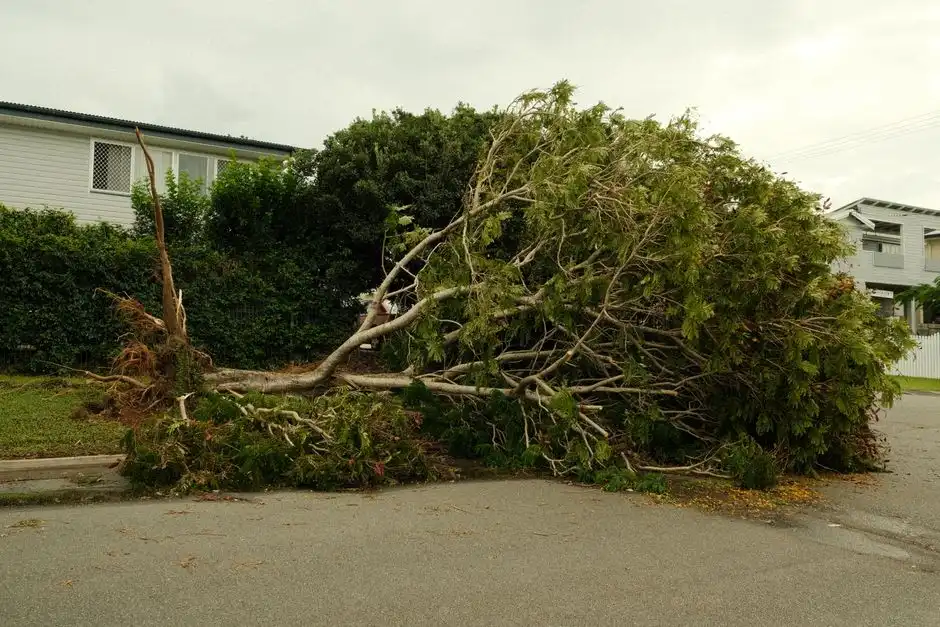
Emergency tree removal is the right call when a tree is on a structure, across a driveway, leaning over a power line, or actively splitting - and a regular crew is the right call when the tree is down in an open yard with nothing under it. That single distinction decides 90% of the calls we run. A regular crew in Georgia can put you on a 3-to-14-day waiting list during storm season; an emergency crew is on site in 60 to 120 minutes. The rest of this post breaks down wait times, 2026 pricing, and the specific risks of leaving a damaged tree standing for a week while you wait your turn.
Emergency tree removal vs waiting for a regular crew: the short answer
Emergency tree removal vs waiting for a regular crew is a decision about risk exposure, not about price. If the tree is still moving, still attached to the stump, or sitting on anything you own, the wait costs more than the emergency premium almost every time.
Here is how we triage it on the phone. Ask yourself three questions: Is anything under the tree? Is the trunk still rooted? Is the tree touching a wire, a roof, or a car? Two or more yes answers means you stop reading and call an emergency line. Zero yes answers means you can shop around and wait for a scheduled slot.
The reason this matters in Georgia specifically is our tree mix. We have loblolly pines that snap at the trunk in a 40 mph gust, water oaks with root systems that rot in our clay soil, and sweetgums that split at the crotch after a hard freeze. Those three fail differently, and they fail fast. A pine that is leaning 15 degrees at 8 a.m. is often flat on the ground by dinner.
If you want the full picture of what we handle, our Emergency Tree Removal in Georgia page covers the whole service line - storm calls, fallen trees, hazard assessments, and the equipment we bring.
How long does regular tree removal take in Georgia?
Regular tree removal in Georgia takes 3 to 14 days to schedule in normal conditions and 2 to 5 weeks after a named storm. That is the honest number, and it is the number most homeowners never hear until they are already on the list.
Here is what drives the wait. A standard removal crew runs two to four people plus a bucket truck or a chipper. In a calm week, a mid-size metro crew books 8 to 12 jobs. The week after a tropical system moves through, the same crew gets 200 calls in 48 hours. Simple math: somebody is waiting.
We see the same pattern every year. In the fall, the calls are about dead pines and hazard limbs before winter. In spring, it is storm-split oaks and Bradford pears that folded under a wet snow. Summer is the quiet stretch for scheduling - you can often get a regular crew out in 3 to 5 days in June and July.
What a regular crew does well:
- Non-urgent removals in open yards with no targets underneath
- Stump grinding, cleanup, and haul-away on a scheduled day
- Preventive work - dead trees, hazard limbs, thinning before storm season
- Lower per-job pricing because there is no after-hours or overtime component
What a regular crew cannot do is compress time. If the tree is on your roof, a 10-day wait is not a scheduling inconvenience - it is 10 days of water running into your ceiling every time it rains.
When is emergency tree removal necessary in Georgia?
Emergency tree removal is necessary in Georgia when a tree is on a structure, blocking the only exit, resting on a vehicle, or leaning over a live conductor. Those four situations are not judgment calls.
We also treat these as emergencies, even though they look calmer from the street:
- A trunk that has cracked and is holding itself up by bark alone
- A root plate that has lifted 6 inches or more out of the ground
- A tree hung up in another tree - a "widow-maker" that can drop without warning
- Any tree within 10 feet of a gas meter, HVAC unit, or pool pump
- A leaning tree over a driveway that is the only way in or out
The lifted root plate is the one homeowners miss most. When a pine or oak starts to tip, the whole root ball rotates and pushes soil up on one side. If you can see a mound of dirt and cracked grass on the far side of the trunk, that tree is already failing. It does not need another week to decide.
We run these calls across the metro and out to the smaller cities, and the failure patterns are regional. In Emergency Tree Removal in Atlanta, the tight lots and mature canopy mean a downed pine usually lands on something - a fence, a shed, a neighbor's car. Out in Emergency Tree Removal in Savannah, the live oaks hold up better in wind but drop massive horizontal limbs after heavy rain saturates the soil. Same storm, different damage.
For the full breakdown of what we do on a storm call, our Storm Damage Tree Removal in Georgia page walks through the sequence: make the site safe, get the weight off the structure, then clear the debris.
Emergency tree removal cost vs regular in Georgia
Emergency tree removal cost vs regular in Georgia runs roughly 25% to 60% higher for the same tree, because you are paying for after-hours labor, faster dispatch, and equipment that sits idle waiting for the next call.
Typical 2026 pricing in this area looks like this:
- Small tree (under 30 feet), open yard, regular crew: $350-$650
- Small tree, emergency, on a fence or shed: $600-$1,100
- Medium tree (30-60 feet), regular: $700-$1,400
- Medium tree, emergency, on a roof: $1,200-$2,400
- Large tree (60+ feet), regular: $1,500-$3,000
- Large tree, emergency, over a structure or line: $2,500-$5,500+
Stump grinding adds $150 to $400 depending on diameter. Crane work, when a tree cannot be safely climbed or dropped, adds $800 to $2,000 on its own. Those numbers move with access - a tree in a back corner with no gate is a different job than one 20 feet from the street.
Here is the math most people skip. A $2,000 emergency removal that stops water intrusion is cheaper than a $2,000 removal plus a $6,000 roof repair plus a mold remediation bill. The premium is real, but it is not the expensive part of waiting.
We quote the job before we start. One number, no surprise line items after the tree is on the ground.
Risks of waiting for tree removal in Georgia
Risks of waiting for tree removal in Georgia compound daily. A tree that is stable on Monday is often not stable on Thursday, and the failure usually happens during the next rain event, not during the calm stretch you used to schedule the work.
What we see when homeowners wait:
- Water damage. A limb through a roof deck lets in every drop. One inch of rain on a 1,500 sq ft roof is roughly 900 gallons. A week of Georgia fall rain through an open hole is a ceiling, insulation, and drywall problem.
- Root plate failure. Saturated clay soil loses bearing strength fast. A leaning tree that held through a dry week can go over in the first heavy rain.
- Secondary targets. A tree resting on a fence becomes a tree resting on a fence and a car after the next gust.
- Insect and fungal spread. A dead pine attracts pine beetles. Those beetles do not stay in one tree.
- Insurance friction. Most policies cover sudden damage. They get harder to work with when the damage is clearly progressive and documented over two weeks.
The insurance point is the one that surprises people. If you have a tree on the roof and you wait 12 days to act, the adjuster can reasonably ask why. Acting fast is not just safer - it is the cleaner claim.
If the tree is already down and blocking access, that is a different category of job. Our Fallen Tree Removal in Georgia service is built for exactly that: get the trunk off the structure or the driveway, cut it into manageable sections, and haul it out the same visit.
What to watch out for when you hire a crew
What to watch out for when you hire a crew is the part nobody warns you about at 11 p.m. after a storm. The emergency space attracts a lot of trucks that show up once and disappear.
Red flags we hear about from homeowners who called someone else first:
- Cash-only, no paperwork. If there is no written scope, there is no recourse.
- No proof of insurance. Ask for a certificate of insurance. If a climber gets hurt on your property and the crew is uninsured, that is your problem.
- Pressure to sign on the spot. A real crew will give you a number and let you think for ten minutes.
- Door-to-door storm chasers. Out-of-state crews roll in after every named storm. Some are excellent. Many are gone before the check clears.
- Quotes that ignore the stump. "Tree removal" and "tree removal plus stump grinding" are two different prices. Get it in writing which one you are buying.
What a good crew does instead: walks the property, identifies the targets, tells you what has to come down first and why, and gives you a single price. We do that on every call, emergency or not.
When to call a professional
Call a professional the moment the tree is touching anything you cannot afford to lose - a roof, a car, a fence, a power drop, or a person's line of travel. That is the line. Below it, you can wait. Above it, you should not.
Do not climb a leaning tree with a chainsaw. Do not cut a trunk that is under load from a fallen limb. Do not stand under a hung-up tree to "take a look." These are the three ways homeowners get hurt in the days after a storm, and all three are avoidable.
If you are not sure which side of the line your tree is on, call us and describe it. We will tell you honestly whether it can wait until Tuesday or needs a truck tonight. Georgia 24/7 Tree Removal handles both - scheduled removals and true middle-of-the-night emergencies - and we would rather talk you out of an unnecessary emergency call than send a crew you did not need.
Frequently Asked Questions
Should I wait for a regular tree crew or call emergency in Georgia?
Call emergency if the tree is on a structure, blocking your only exit, on a vehicle, or leaning over a live wire. Wait for a regular crew if the tree is down in an open yard with nothing underneath it and no one is at risk. Anything touching a target is an emergency call.
How long can I wait for tree removal in Georgia?
If nothing is under the tree, you can safely wait 1 to 3 weeks for a scheduled crew. If the tree is on a roof, a car, or a fence, treat it as a 24-hour window - water damage and secondary failures start immediately and get worse with every rain.
Is emergency tree removal worth the extra cost in Georgia?
Yes, when the tree is on a structure or blocking access. The emergency premium runs 25% to 60% over a regular crew, but a single roof repair or water-damage claim usually costs more than the entire difference. In an open yard, save the money and wait.
What happens if I wait too long for tree removal in Georgia?
The tree keeps failing. Root plates lift further in saturated clay, hung-up limbs drop without warning, and water intrusion spreads through ceilings and insulation. Insurance claims also get harder to support when damage is clearly progressive over two weeks.
How quickly can an emergency crew respond in Georgia?
A true 24/7 emergency crew is typically on site in 60 to 120 minutes inside the metro and 2 to 4 hours in outlying areas. During a major storm event, that stretches - but you should still get a call back within 15 to 30 minutes.
Get help with Emergency Tree Removal in Georgia
If a tree is on your house, your car, or your only way out of the driveway, we are the crew that answers at 2 a.m. We will tell you on the phone whether it can wait or whether we need to roll a truck tonight.
Call Georgia 24/7 Tree Removal at +18664591318 and we will get a crew moving.