How to Prepare Your Trees for Hurricane Season in Georgia
Georgia's hurricane season runs June through November. Learn how to prepare your trees for hurricane season in Georgia with trimming schedules, cost ranges, and storm safety tips.
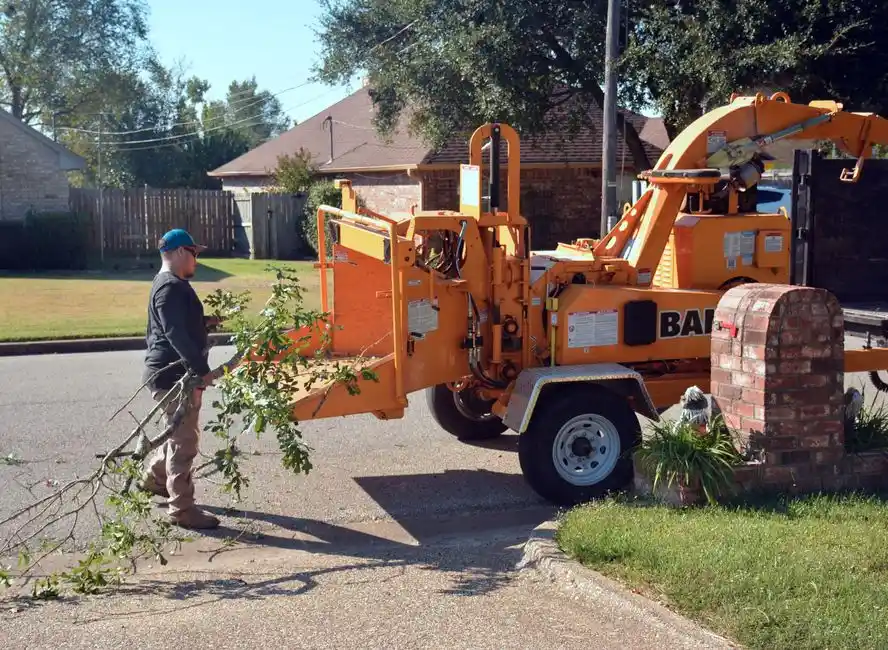
To prepare your trees for hurricane season in Georgia, you need to remove dead wood, thin the canopy, and clear anything within 10 feet of your roof or power lines before the first named storm threatens the coast. The work should be finished by late May, because Georgia's hurricane season runs June 1 through November 30 and the peak risk for inland wind damage lands in August and September. This guide covers the exact trimming window, what a licensed crew actually does during a prep visit, what it costs in 2026, and the mistakes that turn a survivable storm into a $4,000 cleanup.
Why Georgia's Hurricane Season Puts Your Trees at Risk
Georgia's hurricane season puts your trees at risk because the state sits in the direct path of storms that make landfall on the Gulf and Atlantic coasts, then track north through Atlanta, Macon, and Augusta with wind speeds still in the 50-80 mph range. A pine that has stood through 20 years of summer thunderstorms can snap at the trunk when sustained winds hit 60 mph and the ground is already saturated from three days of rain.
We see the same pattern every August. A storm comes ashore near Savannah or Apalachicola, weakens to a tropical storm over land, and still drops enough wind to take out hundreds of trees across middle Georgia. The soil here - red clay through the Piedmont, sandy loam closer to the coast - holds water differently, and that changes which trees fail first.
Three species cause most of our post-storm calls:
- Loblolly pine - fast-growing, shallow-rooted, and the first to uproot in saturated clay.
- Water oak - notorious for dropping large limbs without warning, even in 40 mph gusts.
- Sweetgum - the wood is brittle, and old sweetgums split at the crotch during wind events.
If you have any of those three within falling distance of your house, the prep work matters more than the species you plant next.
When Should You Trim Trees Before Hurricane Season in Georgia?
Trim trees before hurricane season in Georgia between late February and mid-May, and never after a storm has been named in the Atlantic. Pruning triggers a wound response, and a tree needs 6-8 weeks to seal those cuts before high winds arrive. Trim in March or April and the tree has time to compartmentalize the damage. Trim in July and you have opened a door for wind and rot right when the tree can least afford it.
There is a second window in early October for coastal Georgia, after the worst of the season but before winter storms. That window is for cleanup and deadwood removal, not structural pruning.
Here is the schedule we give homeowners:
- February-March: Remove dead, diseased, and crossing branches while the tree is still dormant.
- April-May: Thin the canopy by 15-20% to reduce wind sail. This is the single most effective prep step.
- June 1: Stop all pruning. Any cut after this date is a liability, not a benefit.
- August-September: Monitor only. If a limb cracks, call for Emergency Tree Cutting in Georgia rather than trying to trim it yourself.
If you are already past the window and a storm is spinning in the Gulf, do not trim. Instead, clear the ground around the tree, move vehicles and patio furniture, and have a plan for who you will call if something comes down.
The 7-Step Tree Prep Checklist for Georgia Homeowners
This is the same checklist our crews run on every pre-season inspection, and you can do steps 1 through 4 yourself with a pole saw and a Saturday morning.
1. Walk the property and flag every defect
Look for mushrooms at the base (root rot), vertical cracks in the trunk, and limbs that rub against each other. Flag anything within 10 feet of the roof, 15 feet of a power line, or directly over a driveway.
2. Remove dead wood first
Dead branches are the number one projectile in a hurricane. They weigh less than live wood, so they travel farther. A 6-foot dead limb can go through a window at 70 mph.
3. Thin the canopy, do not top it
Topping - cutting the main leader back to a stub - forces weak regrowth that snaps even easier. Proper thinning removes 15-20% of the inner branches so wind passes through the crown instead of pushing against it.
4. Clear the root zone
Roots hold a tree up, and they need oxygen. Remove ivy, mulch piled against the trunk, and anything parked within 6 feet of the base. Compacted soil from a parked trailer or a shed slab weakens the root plate.
5. Check the lean
A tree that has leaned more than 15 degrees from vertical in the last year is telling you something. We handle those with Leaning Tree Removal in Georgia before the season starts, because a leaning tree that fails during a storm takes the fence, the carport, or the neighbor's roof with it.
6. Inspect after every rain event
Georgia gets 50 inches of rain a year. After a heavy week, walk the property again. New cracks, new lean, new mushrooms - those are your early warnings.
7. Have the phone number ready
When a 60-foot pine is on your roof at 2 a.m., you do not want to be searching for a contractor. Save the number for a 24/7 Tree Removal in Georgia crew before the season starts.
How Much Does Hurricane Tree Prep Cost in Georgia?
Typical 2026 pricing in Georgia for hurricane tree prep runs $400 to $1,200 for a standard residential lot with 3-5 mature trees. That covers deadwood removal, canopy thinning, and a root-zone inspection. A single large oak or pine that needs climbing and rigging runs $600 to $1,500 on its own.
Here is how the numbers break down:
- Small tree trimming (under 30 feet): $250-$500 per tree.
- Medium tree trimming (30-60 feet): $500-$900 per tree.
- Large tree trimming (over 60 feet): $900-$1,800 per tree.
- Dead tree removal: $400-$1,200 depending on access and proximity to structures.
- Stump grinding: $150-$400 extra.
Emergency work after a storm costs 30-50% more because of demand, night crews, and the risk of working around downed lines. Spending $800 in April is cheaper than spending $3,000 in September.
We give you the price before we start, and it does not change when the job is done. If you are in the middle of the state and want a crew that knows the local soil and tree mix, our Emergency Tree Removal in Macon team runs pre-season inspections through May.
Common Mistakes We See After Every Georgia Storm
The same four mistakes show up on almost every property we visit after a hurricane, and each one turns a manageable cleanup into an insurance claim.
Mistake 1: Topping the tree. Topping creates a flush of weak, fast-growing shoots that attach poorly to the trunk. The next storm takes them all at once.
Mistake 2: Pruning in June or July. Late pruning leaves open wounds that cannot seal before the wind arrives. The tree loses structural wood and becomes more likely to split.
Mistake 3: Ignoring the root flare. Mulch piled 8 inches up the trunk holds moisture against the bark and invites rot. Keep mulch 2-3 inches deep and pulled back 6 inches from the trunk.
Mistake 4: Waiting until the storm is named. By then, every reputable crew in the state is booked, and the only people available are the ones knocking on doors with a chainsaw and no insurance. Book your prep in March or April.
If a tree does come down, do not cut it yourself if it is touching a power line or resting on a structure. Call a professional. We handle Fallen Tree Removal in Georgia with the equipment to lift a trunk off a roof without doing more damage.
When to Call a Professional for Tree Care Before Hurricane Season
Call a professional for tree care before hurricane season if any tree on your property is taller than 30 feet, within falling distance of a structure, or showing signs of internal decay. Those three conditions cover about 80% of the homes we visit in Georgia, and they are the ones that generate the emergency calls in August.
You should also call us if:
- The tree has a cavity, a conk, or mushrooms at the base.
- You see a crack in the trunk wider than a quarter-inch.
- The tree has leaned more than 15 degrees in the last 12 months.
- Branches are growing into power lines.
- You have had a tree fail on the property before - the same soil and wind patterns will do it again.
Our team at Georgia 24/7 Tree Removal handles pre-season inspections, structural pruning, and hazardous tree removal across the state. We are a state-licensed tree service, and we carry the insurance that protects your property if something goes wrong on the job. If you want a crew that has worked the same clay soil and the same loblolly pines for years, we are the ones to call.
Frequently Asked Questions
How do I prepare my trees for hurricane season in Georgia?
Remove dead wood, thin the canopy by 15-20%, clear the root zone, and check for lean or cracks. Finish all pruning by late May. After June 1, monitor only and call a professional if a limb cracks or a tree starts to lean.
When should I trim trees before hurricane season in Georgia?
Trim between late February and mid-May. The tree needs 6-8 weeks to seal pruning cuts before high winds arrive. Coastal Georgia also has a cleanup window in early October, but that is for deadwood, not structural pruning.
Who can help prepare trees for hurricane season in Georgia?
A licensed tree service with ISA-certified arborists on staff. Georgia 24/7 Tree Removal runs pre-season inspections and structural pruning across the state. We give you a fixed price before we start and carry full liability insurance.
Does tree trimming prevent hurricane damage in Georgia?
Proper trimming reduces wind sail and removes the dead limbs that become projectiles. It does not make a tree storm-proof, but it cuts the risk of limb failure by roughly half on a well-maintained tree. Topping makes damage worse, not better.
How much does hurricane tree prep cost in Georgia?
Expect $400-$1,200 for a typical residential lot with 3-5 mature trees in 2026. A single large oak or pine runs $600-$1,500. Emergency work after a storm costs 30-50% more, so pre-season prep is the cheaper option.
Get Help with Emergency Tree Removal in Georgia
If a storm has already brought a tree down on your property, or you want a crew to inspect your trees before the next one, call Georgia 24/7 Tree Removal at +18664591318. We answer around the clock, and we will tell you on the phone whether it is an emergency or something we can schedule for the morning.
Pre-season prep is the cheapest insurance you can buy for your home. One afternoon in April saves you a week of cleanup in September.