How to Remove a Fallen Tree from Your Yard Safely
A fallen tree in your Georgia yard is dangerous if you cut it wrong. Follow these safe removal steps, know the 2026 costs, and learn when to call a pro.
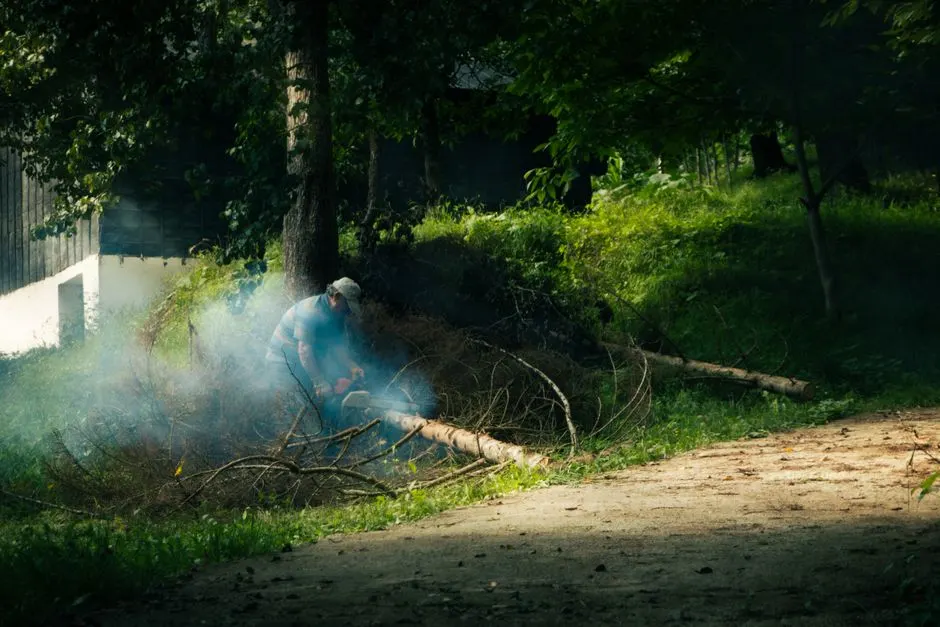
To remove a fallen tree from your yard safely, first check for downed power lines and call 911 if any are touching the tree, then assess the trunk for tension and lean before you start a saw. If the tree is clear of utilities and resting flat, you can cut it in sections from the top down, keeping both feet on stable ground and your body out of the kickback zone. This guide walks you through the exact steps, the tools that actually matter, and the 2026 costs if you decide to hand it off.
A fallen tree is not just a mess. In Georgia, a downed pine or oak can weigh 4,000 to 12,000 pounds, and the root plate can spring back with enough force to kill. Every year we get called to yards in Emergency Tree Removal in Atlanta where a homeowner started cutting a tensioned trunk and the log rolled. That is the moment you stop and call for help.
How do I safely remove a fallen tree in Georgia?
You safely remove a fallen tree in Georgia by treating every downed trunk as a loaded spring until you prove otherwise. The tree fell because something failed - roots, trunk, or soil - and the remaining wood is still holding stored energy. Your first job is not cutting. It is reading the tree.
Walk the full length of the tree from a distance of at least 20 feet. Look for these hazards before you touch a saw:
- Power lines: If any line is touching the tree or lying within 10 feet, stop. Call 911 and your utility. No chainsaw, no exceptions.
- Hangers: Broken limbs caught in the canopy above you. They fall without warning.
- Root plate: The vertical wall of dirt and roots at the stump. It can weigh 3,000 pounds and flip back into the hole.
- Tension and compression: On a leaning trunk, one side is stretched (tension) and the other is crushed (compression). Cutting the compression side first can pinch your bar or throw the log.
- Spring poles: A sapling or branch bent under the trunk. When you cut the trunk, the pole snaps back at face height.
If the tree is resting flat on the ground with no lean, no hangers, and no utilities, you can proceed. If it is leaning against another tree or a structure, that is a different job - one that calls for Hazardous Tree Removal in Georgia because the tree is still under load and can shift the moment you cut.
Can I remove a fallen tree myself in Georgia?
You can remove a fallen tree yourself in Georgia if it is under 12 inches in diameter, lying flat, and clear of any structure or utility. That covers most ornamental trees and small pines. It does not cover the 24-inch oaks that come down in a summer storm.
Here is the honest dividing line. If the trunk is small enough that you can lift one end by hand, you can probably handle it. If you cannot budge it, you cannot control it with a saw either. A 12-inch green oak log weighs about 60 pounds per foot. A 24-inch log weighs closer to 250 pounds per foot. Once a log is that heavy, it rolls wherever gravity wants, not where you want.
We also see homeowners underestimate the cleanup. A single 40-foot pine produces roughly 1.5 cubic yards of brush and wood - about three pickup loads. If you do not have a place to put it, that is a real cost. Many Georgia municipalities will not pick up tree debris after a storm unless it is cut to specific lengths and stacked at the curb. Check your city rules before you cut, or you will be moving the same pile twice.
What tools do I need to remove a fallen tree?
You need a sharp chainsaw with a 16- to 20-inch bar, a plastic or softwood wedge, a pry bar, a come-along, chaps, a hard hat, eye and ear protection, and steel-toe boots. That is the minimum. A second person to watch the trunk while you cut is not optional - it is the single best safety tool you have.
Do not use a dull chain. A dull chain heats the bar, cuts crooked, and kicks back more often. Sharpen or swap the chain before you start, and keep a spare on hand. If you are cutting near the ground, a short bar is safer than a long one because there is less exposed chain to catch dirt.
Skip the axe for anything over 6 inches. It is slower, it bounces, and it puts your shins in the strike zone. If you do not own a chainsaw and do not plan to use one again, renting one for $60 to $90 a day in 2026 is cheaper than buying - but only if you have cut with one before. A chainsaw is not a tool you learn on a tensioned trunk.
Steps to remove a fallen tree in Georgia
Steps to remove a fallen tree in Georgia follow a strict order: clear the area, plan your escape routes, cut the small stuff first, then section the trunk from the top down. Never start at the stump. The stump end carries the most weight and the most tension.
- Set the perimeter. Keep kids, pets, and neighbors at least two tree lengths away. A rolling log can travel 15 feet on flat ground.
- Plan two escape routes. Before every cut, know where you will step if the trunk shifts. Both routes should be 45 degrees behind you, never straight back.
- Remove the canopy. Cut small branches from the top side of the trunk, working from the tip toward the stump. Do not stand on the trunk.
- Clear the root plate. If the root plate is standing, do not stand behind it or in front of it. Cut the trunk free from a side position.
- Section the trunk. Cut in 16- to 24-inch lengths, starting at the top end. Use wedges to keep the kerf open.
- Roll, do not lift. Use a pry bar or peavey to move logs. If you cannot roll it, it is too heavy to handle alone.
- Stack and stage. Pile brush and wood away from the house, at least 30 feet, so it does not become termite or fire fuel.
If at any point the tree is leaning on a structure - a fence, a shed, a carport - stop. That is Fallen Tree Removal in Georgia territory because the tree is still bearing load against something that can fail. We see this constantly after summer storms in Emergency Tree Removal in Marietta, where mature hardwoods sit close to older homes and detached garages.
How to cut up a fallen tree in Georgia
To cut up a fallen tree in Georgia, start at the top of the trunk and work toward the stump, cutting from the tension side first on any bent section. On a flat trunk, cut from the top down, but stop before the bar reaches the bottom third. Then finish from underneath. This prevents the log from pinching your bar and trapping the saw.
On a leaning or bent trunk, the rules flip. The compression side is where the wood is crushed, and it will pinch. The tension side is where the wood is stretched, and it will open. Cut a small notch on the compression side first, then cut from the tension side to meet it. If you get this backward, the trunk can split and throw a chunk of wood.
Use a wedge on every cut over 12 inches. Tap it into the kerf behind the bar as you go. It keeps the cut open and gives you a visual warning if the trunk starts to close. If the wedge gets tight, stop and reassess - that is the tree telling you it is under more load than you thought.
For a tree that came down in a hurricane or tropical storm, the wood is often twisted and under more tension than a normal fall. That is Tree Removal After Hurricane in Georgia work, and it is one of the few times we tell homeowners not to touch the trunk at all.
What to watch out for
The most common mistakes we see are cutting the compression side first, standing on the trunk, and working alone. Each one turns a manageable tree into an emergency room visit.
Here is what to avoid:
- Cutting a tensioned trunk from the top. The bar pinches, the saw kicks back, and the log rolls toward you.
- Standing on the trunk. If it shifts, you go with it. Keep both feet on the ground.
- Working under a hanger. A broken limb caught overhead can drop at any vibration.
- Using a dull chain. Dull chains cause more kickback than sharp ones because you push harder.
- Cutting alone. If you get pinned, no one is there to call for help.
- Ignoring the root plate. A standing root plate can fall back into the hole and crush anything in front of it.
- Burning the debris during a burn ban. Georgia issues burn bans from May 1 to September 30 in many counties. Check before you light a match.
One more: do not use a chainsaw above shoulder height. If you have to reach up to cut, the tree is too big for a homeowner job. That is Emergency Tree Cutting in Georgia work, and it needs a bucket truck or a climber.
When to call a professional
Call a professional when the tree is touching a structure, leaning more than 15 degrees, has a diameter over 12 inches, or is anywhere near a power line. Those four conditions cover 90 percent of the calls we run.
Georgia 24/7 Tree Removal handles the jobs homeowners should not touch. We bring the rigging, the chains, and the insurance. If the tree is on a house, a car, or a fence, we can lift it off without causing more damage. If it is blocking a driveway or a road, we can clear it the same day.
We also handle the cleanup. That means the brush, the logs, and the stump grinding if you want it. You do not have to rent a chipper or make three trips to the dump. We cut, load, and haul, and we leave the yard ready to mow.
If you are not sure whether your tree is a DIY job or a pro job, call us and describe it. We will tell you straight. If it is small and flat, we will say so. If it is a hazard, we will be there with the right equipment.
Fallen tree removal cost in Georgia
Fallen tree removal cost in Georgia runs $350 to $1,200 for a typical yard tree in 2026, with most jobs landing between $500 and $800. The price depends on diameter, location, and whether the tree is on a structure.
Here is what drives the number:
- Small tree (under 12 inches): $350 to $600. Usually a one-person job with a chainsaw and a truck.
- Medium tree (12 to 24 inches): $600 to $1,200. Needs a crew, rigging, and sometimes a stump grinder.
- Large tree (over 24 inches): $1,200 to $3,500+. Requires a crane or a bucket truck in most cases.
- Tree on a structure: Add $500 to $2,000 for careful rigging and load control.
- Emergency or after-hours: Add 20 to 50 percent for nights, weekends, and storm surges.
- Stump grinding: $150 to $400 depending on diameter and root flare.
Insurance often covers fallen tree removal if the tree hit a covered structure, like a house, garage, or fence. It usually does not cover removal if the tree just fell in the yard. Check your policy before you assume. We can provide documentation and photos for your claim.
If you are in one of the older neighborhoods with tight lot lines, expect the higher end of the range. We do a lot of Emergency Tree Removal in Decatur where mature oaks and narrow driveways make every cut a rigging job.
Frequently Asked Questions
How do I safely remove a fallen tree in Georgia?
Check for power lines first and call 911 if any are down. If the tree is clear, cut from the top down, stay off the trunk, and use wedges on any cut over 12 inches. Never cut a tensioned trunk from the compression side.
Can I remove a fallen tree myself in Georgia?
Yes, if it is under 12 inches in diameter, lying flat, and clear of structures and utilities. If it is leaning, hung up, or over 12 inches, call a pro. Those jobs can kill an experienced cutter, let alone a first-timer.
How much does fallen tree removal cost in Georgia?
Expect $350 to $1,200 for a typical yard tree in 2026, with most jobs between $500 and $800. Trees on structures, large hardwoods, and after-hours emergency calls cost more. Insurance may cover removal if the tree hit a covered structure.
What tools do I need to remove a fallen tree?
A sharp chainsaw with a 16- to 20-inch bar, wedges, a pry bar, chaps, a hard hat, eye and ear protection, and steel-toe boots. A second person to watch the trunk is the most important safety tool you have.
Who removes fallen trees in Georgia?
Licensed tree services remove fallen trees in Georgia. Georgia 24/7 Tree Removal handles emergency and scheduled removal, including trees on houses, cars, and fences. We also haul the debris and can grind the stump.
Get help with Emergency Tree Removal in Georgia
If your tree is on a structure, near a power line, or too big to handle safely, do not risk it. Georgia 24/7 Tree Removal is available around the clock to cut, rig, and haul it away. Call +18664591318 and we will be on our way.