How to remove a large tree limb without damaging your roof
A large limb hanging over your roof is a countdown, not a decoration. Here's how to remove it safely in Georgia without punching a hole in your shingles.
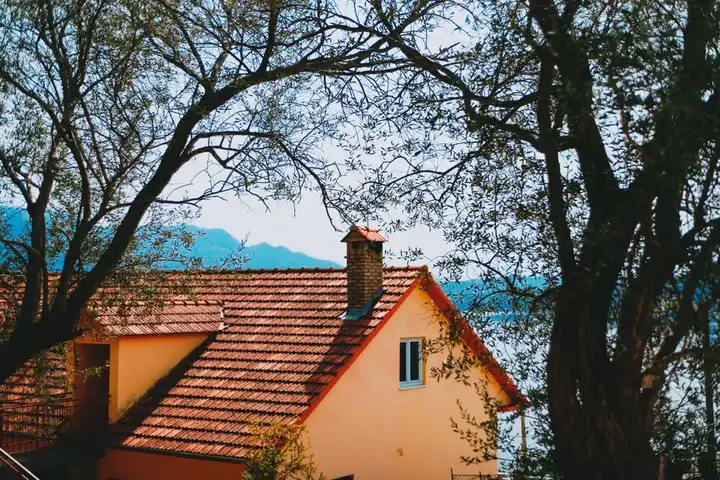
Removing a large tree limb without damaging your roof means controlling the limb's fall with rigging and a three-cut sequence - never by cutting it free and hoping it misses. You anchor a friction device above the cut, tie off the limb, and lower it in sections so its weight never lands on your shingles. If the limb is already resting on the roof, is cracked at the trunk, or sits above a two-story drop, stop and call a crew. The rest of this guide walks through the rigging, the cuts, and the Georgia-specific conditions that change the math.
Why a limb over your roof is a countdown, not a decoration
A limb over your roof is a countdown, not a decoration, because Georgia's summer storms and winter ice load it past its breaking point faster than most homeowners expect. A 12-inch-diameter oak limb can weigh 1,200 to 1,800 pounds when green - and a single ice storm adds hundreds of pounds more. That weight doesn't distribute evenly across your roof deck. It lands on one spot, and that spot is usually a valley, a ridge cap, or the edge of a dormer where the sheathing is weakest.
Insurance adjusters we work with see the same pattern every spring: a limb that's been "fine for years" drops during a 40 mph thunderstorm gust and punches through the decking above a bedroom. The repair bill for a roof penetration in metro Atlanta runs $2,800 to $6,500 in 2026, and that's before interior water damage. Removing the limb first is almost always cheaper than repairing the hole it leaves.
Homeowners across Emergency Tree Removal in Atlanta deal with this constantly because the city's mature hardwood canopy hangs low over bungalows and 1950s ranches with shallow-pitch roofs. The same is true in Macon, Augusta, and Savannah, where live oaks and pecans drop heavy lateral limbs after every tropical system that clips the coast.
How do I remove a large tree limb without damaging my roof in Georgia?
You remove a large tree limb without damaging your roof in Georgia by working from a stable position above the limb, rigging it to a friction device, and cutting it in sections small enough to lower by hand. The limb never free-falls. That's the whole principle. Everything else - the rope, the friction hitch, the cut placement - exists to make sure the wood comes down at a speed you control.
Here's the sequence our crews run through on every limb-over-roof job:
- Assess the attachment point. Look for a crack, a bark inclusion, or rot at the branch collar. If the limb is already failing at the trunk, do not climb it.
- Set a rigging line above the cut. A 5/8-inch arborist bull rope rated at 6,000+ pounds working load is the minimum for limbs over 8 inches in diameter.
- Establish a friction point. A port-a-wrap on the trunk or a rigging ring in a nearby crotch lets one ground person control a limb that would otherwise be too heavy to hold.
- Cut in sections. Work from the tip back toward the trunk, taking 4- to 6-foot pieces so each piece stays under 150 pounds.
- Lower, don't drop. The ground person eases each section down. If it swings toward the roof, the friction device stops it.
If you don't have a climbing harness, a rated rope, and a second person on the ground, you don't have the setup this job requires. That's not a judgment call - it's the difference between a limb on the lawn and a limb in your living room.
The rigging setup that keeps a limb off your shingles
The rigging setup that keeps a limb off your shingles is a high anchor point, a friction device, and a ground person who never takes their hand off the rope. Skip any one of those and the limb will pendulum toward the house. We see it happen with DIY removals every storm season.
Anchor the rigging line as high as you can safely reach - ideally 6 to 10 feet above the cut. The higher the anchor, the more vertical the drop and the less horizontal swing you get. A limb that swings 3 feet toward the roof is a limb that's about to hit the fascia.
Use a friction device, not your hands. A port-a-wrap or a rigging bollard lets the ground person hold a 400-pound section with two fingers. Without one, a limb that weighs more than you do will rip the rope out of your grip and take your gloves with it.
For limbs that hang directly over a valley or a skylight, we sometimes set a second line as a tag line to steer the piece away from the roof. That's a two-person job minimum - one on the rigging line, one on the tag. If you're working alone, you're already in over your head.
Homeowners in Emergency Tree Removal in Sandy Springs face a specific version of this problem: tall pines and water oaks on sloped lots where the limb hangs over the roof but the ground drops away beneath it. There's nowhere to stand. That's a rigging job, not a ladder job.
Cutting sequence: three cuts that control the fall
The three-cut sequence - undercut, top cut, and final cut - is what keeps a heavy limb from tearing bark down the trunk or kicking back into your face. Each cut does a specific job. Do them in order.
1. The undercut
Make a shallow cut on the underside of the limb, 12 to 18 inches out from the trunk. Go in about a quarter of the limb's diameter. This cut prevents the bark from peeling down the trunk when the limb falls - a tear that can open the tree to disease.
2. The top cut
Cut from the top, 2 to 3 inches further out from the trunk than the undercut. Keep cutting until the limb starts to drop. The undercut meets the top cut and the limb separates cleanly.
3. The final cut
Remove the remaining stub flush with the branch collar - not flush with the trunk. Cutting into the collar removes the tree's natural healing zone. Leave the collar intact and the tree seals the wound on its own.
On limbs over 10 inches in diameter, we add a notch cut on the compression side before the top cut. That notch tells the limb which way to fall. Without it, a heavy lateral limb can split and barber-chair - one of the most dangerous failures in tree work.
If the limb is already cracked and hanging, don't cut it at all. That's a Hazardous Tree Removal in Georgia situation, and the right move is to clear the area and call a crew with a bucket truck or a crane.
What to watch out for
Most roof damage from limb removal happens in the last 10 seconds of the job, not the first. The limb is almost down, the cutter relaxes, and the final section swings into the gutter. Watch for these specific failure points:
- Cutting too close to the trunk on the first cut. A limb that separates at the collar takes bark with it and can kick back toward the climber.
- Underestimating green weight. A 6-foot section of 10-inch oak weighs roughly 180 pounds. Two of those on a rope you can't control is a roof strike.
- Ignoring the wind. Anything over 15 mph changes where a limb lands. In Georgia, afternoon thunderstorms build fast - check the radar before you climb.
- Working over a power drop. The service line to your house is live. If the limb is within 10 feet of it, call the utility first.
- Cutting a limb that's under tension. A limb pinned by another branch stores energy. When it releases, it moves faster than you can react.
We also see homeowners try to pull a limb off the roof with a truck and a chain. That's how you tear off shingles, bend flashing, and crack the fascia board. The limb comes off, but so does part of your roof.
When to call a professional
Call a professional when the limb is already touching the roof, when it's larger than 8 inches in diameter, or when you can't reach a safe anchor point above the cut. Those three conditions cover about 80 percent of the limb-over-roof calls we run. The other 20 percent are homeowners who started the job and realized halfway through that they were in over their heads.
Georgia 24/7 Tree Removal handles limb removal over roofs every week - from a single water oak limb resting on a carport in Marietta to a full post-storm cleanup in Savannah. We rig the limb, lower it in sections, and tarp any exposed decking before we leave. If the limb has already punched through, we can remove it and stabilize the opening so your roofer can make the permanent repair.
We also handle the jobs that aren't safe for anyone to climb: limbs cracked at the trunk, trees leaning over the house after a storm, and anything tangled in the service drop. Those get a bucket truck or a crane, not a ladder.
Frequently Asked Questions
How do I remove a large tree limb without damaging my roof in Georgia?
Rig the limb to a friction device above the cut, then lower it in 4- to 6-foot sections so it never free-falls. Use the three-cut sequence - undercut, top cut, final cut - and keep each section under 150 pounds. If the limb is already on the roof or cracked at the trunk, call a crew.
Who should I call for a tree limb over my roof in Georgia?
Call a licensed tree service with rigging and crane capability - not a landscaper or a handyman. Georgia 24/7 Tree Removal handles limb-over-roof calls around the clock. If the limb is within 10 feet of the power drop, call your utility first, then us.
How much does tree limb removal cost in Georgia?
Typical 2026 pricing for a single large limb over a roof runs $350 to $900, depending on height, diameter, and rigging complexity. Storm-emergency calls after hours run $600 to $1,400. Full tree removal is a separate quote, usually $1,200 to $3,500.
Can a tree limb damage my roof in Georgia?
Yes. A 12-inch green oak limb weighs 1,200 to 1,800 pounds and will punch through asphalt shingles, decking, and sometimes the ceiling below. Even a limb that doesn't penetrate can crack shingles, bend flashing, and create leaks that show up months later.
Is it safe to remove a tree limb myself in Georgia?
Only if the limb is under 6 inches in diameter, hangs over open ground, and you have a rated rope, a harness, and a second person on the ground. Anything over a roof, near a power line, or already cracked is not a DIY job. The injury rate for chainsaw work above shoulder height is high for a reason.
Get help with Emergency Tree Removal in Georgia
If a limb is sitting on your roof right now, or you've started a removal and realized the rigging is beyond what you can safely handle, call us. We run 24/7 Tree Removal in Georgia and can be on-site the same day across metro Atlanta and most of the state.
Call +18664591318 and we'll walk you through what to do with the limb until we get there - including whether to stay in the room below it.