Signs a tree is about to fall on your property
Leaning trunks, cracked soil, and dead branches are the clearest signs a tree is about to fall on your property. Here is what to check and when to call.
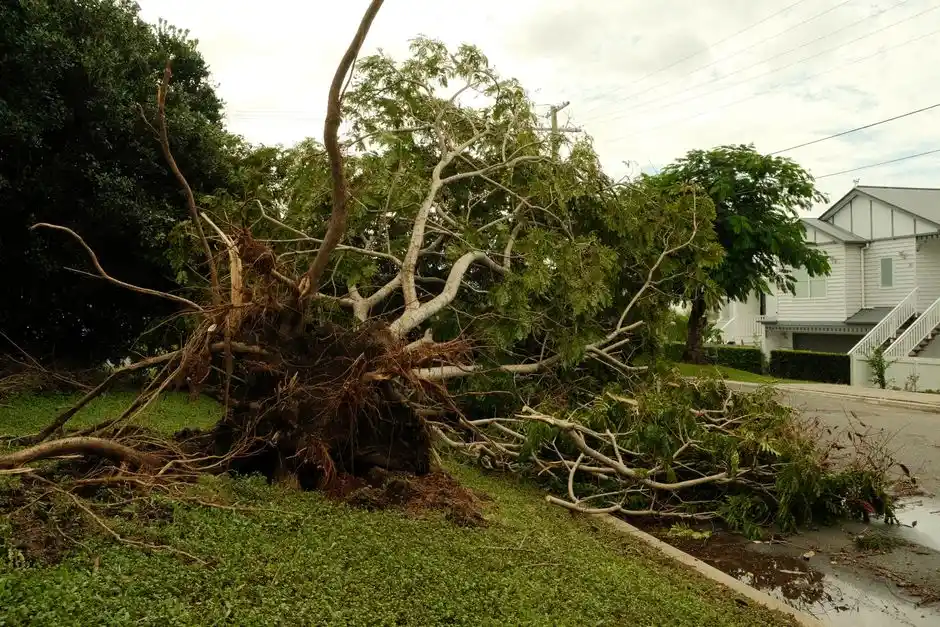
The clearest signs a tree is about to fall on your property are a new lean, cracked or heaving soil at the base, dead or dropping branches, and a hollow or soft trunk. If you see any of these, treat the tree as hazardous until a professional says otherwise.
Georgia's red clay, summer storms, and aging hardwoods make this a real risk for homeowners across the state. Below we break down what to look for above ground, what to check at the root line, and when to stop watching and call for help.
What are the signs a tree is about to fall in Georgia?
Signs a tree is about to fall on your property in Georgia start with the trunk and the ground around it. A tree that was straight last year and leans 10 degrees or more this year is moving, and moving trees fall.
Walk your property after every storm and look for these:
- A new lean that was not there before
- Cracks or gaps in the soil at the base, especially on the side away from the lean
- Mushrooms or conks growing on the trunk or root flare
- Bark peeling off in sheets or a soft, spongy trunk
- Dead limbs in the upper canopy that drop without wind
One of these is a warning. Two or more means the tree is already failing. We handle Hazardous Tree Removal in Georgia every week for exactly this situation, and the trees we take down are almost never a surprise to the homeowner - they had been watching it for months.
Above-ground signs you can spot from your yard
Above-ground signs are the ones you can see from your driveway, and they are usually the first clue that something is wrong. Start at the top and work down.
Canopy and branches
A thinning canopy in the middle of summer is a red flag. So is a tree that leafs out later than its neighbors or drops green leaves in July. Both point to root damage the tree cannot recover from.
Look for deadwood - bare branches with no twigs at the ends. A single dead limb over a driveway is a hazard on its own, and we remove those with Tree Limb Removal in Georgia before they come down on a car or a roof.
Trunk and bark
Run your eyes up the trunk. Vertical cracks, seams, and sunken areas mean the wood inside is separating. If you can push a screwdriver into the trunk more than an inch, the wood is rotting.
Bark that is loose or falling off in patches is another sign. So are weeping spots - dark, wet-looking patches that smell sour.
Lean and sweep
A tree that leans toward your house, your driveway, or your power drop is the one to watch. A sudden lean of 10 to 15 degrees is an emergency. A slow lean over years is still a risk, especially if the soil is wet.
Ground-level clues most homeowners miss
Ground-level clues are the most reliable signs a tree is about to fall, and they are the ones people walk right past. The root plate is what holds the tree up, and when it starts to fail, the ground tells you first.
Cracked or heaved soil
Get down and look at the base of the trunk. A crack in the soil that runs away from the trunk - especially on the opposite side of the lean - means the root plate is lifting. That is the tree starting to tip.
You may also see soil pushed up in a mound on one side. That is the root ball rotating. Once you see that, the tree is days or hours from going over, not months.
Mushrooms, conks, and soft wood
Mushrooms at the base are a sign of decay in the roots. Shelf-shaped conks on the trunk mean the inside is hollow. Both are serious.
Tap the trunk with a rubber mallet or the back of a hatchet. A hollow sound means the tree is not solid. Do not drill into it - that just opens another wound.
Root damage from digging, grading, or paving
Roots are shallow in Georgia's clay. If you or a neighbor cut roots for a driveway, a pool, or a sewer line within the last five years, that tree is now unstable. Same for trees that had soil piled up over their roots during grading.
How do I know if a tree will fall on my house in Georgia?
You know a tree will fall on your house in Georgia when its lean, its height, and its distance from the house add up to a reach problem. A 60-foot tree that leans 15 degrees toward a house 40 feet away is already inside its fall zone.
Here is the quick math. A tree's fall zone is roughly its height. If the tree is taller than the distance from its trunk to your house, it can reach you.
Then add the lean. A tree leaning toward the house cuts that distance by 20 to 30 percent. A leaning tree that is 50 feet tall and 45 feet from the house is a real threat.
Other things that push a tree toward your house:
- Wet soil after three or more days of rain
- Saturated clay that has no room for more water
- Wind from the direction of the lean
- A hollow trunk or a rotten root flare
If the tree is within reach and shows any of the signs above, do not wait for the next storm. We take these down with Leaning Tree Removal in Georgia before they get a chance to fall on their own.
Georgia-specific risks: storms, soil, and species
Georgia-specific risks come from our soil, our storms, and the trees we plant. Red clay holds water and then lets go. Summer thunderstorms drop 2 to 3 inches in an hour. And our most common shade trees - pines, oaks, and sweetgums - all have their own failure patterns.
Pines are the fastest to go. They have shallow roots, they grow tall, and they snap or tip in saturated soil. If you have a pine within falling distance of your house, check it after every storm.
Oaks are slower but heavier. A mature water oak can weigh 20 to 30 tons. When one goes, it goes through the roof and into the living room.
Sweetgums and maples are prone to hollow trunks. By the time you see the conk, the inside is gone.
We see this most in older neighborhoods where trees were planted 50 to 70 years ago and the soil has been compacted by decades of foot traffic and paving. If you are in one of those areas, our team handles Emergency Tree Removal in Atlanta and the surrounding communities, and we know how these older trees fail.
What to watch out for
What to watch out for is the stuff that turns a manageable tree into a house-sized problem. Most of the calls we get could have been handled weeks earlier for a fraction of the cost.
Do not:
- Park under a leaning tree, even for a few minutes
- Let kids play under a tree with dead limbs
- Try to pull a leaning tree down with a truck or a come-along
- Cut the roots on the high side of a lean to "level it out"
- Pile mulch 6 inches up the trunk - that rots the base
- Ignore a tree just because it survived the last storm
The biggest mistake is waiting. A tree that is cracking soil at the base is not going to heal. It is going to fall. The only question is whether it falls on your schedule or its own.
When to call a professional
Call a professional when the tree is within falling distance of anything you care about and shows two or more warning signs. That includes a new lean, cracked soil, a hollow trunk, or dead limbs over a structure.
We are Georgia 24/7 Tree Removal, and we handle this work around the clock. Our team can look at the tree, tell you what it is doing, and take it down safely - often the same day.
If the tree is already touching a power line, call your utility first. Then call us. We do not touch live lines, but we can handle everything else, including Emergency Tree Removal in Savannah and across the state.
If the tree has already come down, we handle Fallen Tree Removal in Georgia and get it off your house, your car, or your driveway fast.
Frequently Asked Questions
What are the signs a tree is about to fall in Georgia?
The main signs are a new lean of 10 degrees or more, cracked or heaved soil at the base, mushrooms or conks on the trunk, a hollow sound when you tap it, and dead limbs dropping on their own. Two or more of these means the tree is failing.
How do I know if a tree will fall on my house in Georgia?
Compare the tree's height to its distance from your house. If the tree is taller than the distance, it can reach you. Add 20 to 30 percent for a lean toward the house. A 50-foot tree 45 feet away with a lean is a real threat.
Who do I call if a tree is about to fall in Georgia?
Call a licensed tree service that handles hazardous removals. Georgia 24/7 Tree Removal takes these calls around the clock at +18664591318. If the tree is on a power line, call your utility first, then call us.
Can I prevent a tree from falling in Georgia?
You can reduce the risk. Water deeply during dry spells, keep mulch 2 to 3 inches away from the trunk, avoid cutting roots, and have the tree inspected every 2 to 3 years. You cannot stop a tree that is already failing - that one needs to come down.
How much does it cost to remove a hazardous tree in Georgia?
Typical 2026 pricing in this area runs $800 to $2,500 for a hazardous tree, and $3,000 or more if it is over a house or needs a crane. Emergency and after-hours work costs more. We give you a price before we start.
Get help with Emergency Tree Removal in Georgia
If you see a lean, cracked soil, or a hollow trunk, do not wait for the next storm to make the decision for you. We handle Emergency Tree Removal in Georgia 24 hours a day, and we can be on your property fast.
Call Georgia 24/7 Tree Removal at +18664591318. We will tell you what the tree is doing and take it down safely.