Why is my tree leaning after a Georgia storm
A leaning tree after a Georgia storm usually means root failure or a cracked trunk - not just wind. Here's how to tell if it's dangerous and what to do next.
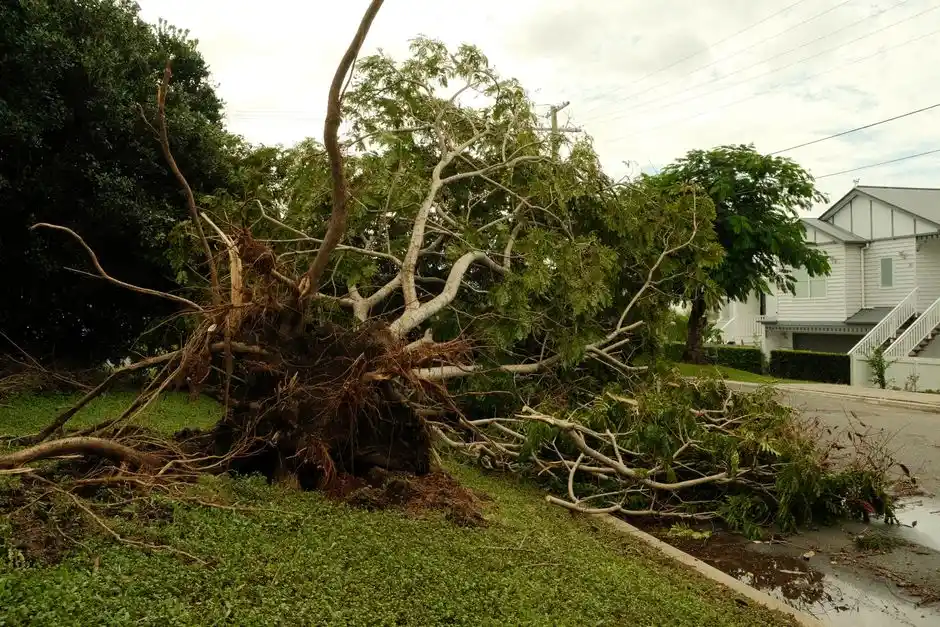
Your tree is leaning after a Georgia storm because the root plate has failed, the soil has gone soft, or the trunk has cracked - not simply because the wind blew hard. A tree that was vertical before the storm and is now tilted is a structural emergency, and it will not correct itself.
We handle these calls every week across Georgia, and the pattern is almost always the same: saturated soil plus a gust of 40 to 60 mph, and a 60-foot pine or water oak tips 15 to 30 degrees overnight. This post explains what actually causes that lean, how to read the danger signs, what removal costs in 2026, and when to call us instead of waiting it out.
The short answer: root failure, not wind
A leaning tree after a storm in Georgia is almost always a root-plate failure, which means the anchoring roots on one side have torn loose from saturated clay or sandy loam. The tree is no longer held upright by the ground - it is balanced on a hinge of roots and soil that can give way without warning.
Wind alone rarely tips a healthy tree. What tips it is wind acting on a tree whose roots are already compromised by months of rain, shallow soil, or root rot. Once that plate lifts, the lean you see above ground is the visible half of a failure that extends 6 to 10 feet underground.
Why Georgia storms make trees lean
Georgia's soil and storm patterns combine to produce more leaning trees than most homeowners expect. We see it after every tropical system that pushes up from the Gulf, and we see it after ordinary summer thunderstorms too.
Saturated soil loses its grip
Georgia clay holds water. After three or four days of rain, the top 3 to 5 feet of soil behaves more like paste than ground. A root plate that normally resists 80 mph gusts can fail at 45 mph once it is that wet. That is why a tree leaning after heavy rain in Georgia is often the first sign of a problem - the storm only finished what the rain started.
Shallow-rooted species tip first
Pines, water oaks, silver maples, and willows have wide, shallow root systems. They are the first to lean in a storm. A mature loblolly pine 70 feet tall may have 80 percent of its anchoring roots in the top 24 inches of soil. That is not much grip when the ground is soaked.
Wind direction and exposure
A tree that has grown for 30 years with wind pushing from one direction has grown wood to resist that direction. When a storm arrives from the opposite quarter, the tree has no built-in brace. That is why a tree leaning after hurricane in Georgia frequently leans toward a neighbor's house rather than away from it.
How to tell if a leaning tree is dangerous
A leaning tree after a storm in Georgia is dangerous when the soil around the base has lifted, cracked, or bulged, or when you can see exposed roots on the tension side. Those are the signs that the tree is still moving.
Stand at least 20 feet back and look for these:
- Soil heave: a mound or crack on the side opposite the lean. This means the root plate is rotating.
- Exposed roots: roots pulled out of the ground like fingers. The tree has already lost its anchor.
- Trunk cracks or splits: a vertical split in the trunk means the wood is failing, not just the roots.
- A sudden new lean of more than 10 degrees: anything past 15 degrees from vertical is a removal candidate.
- Hanging limbs overhead: a cracked limb 40 feet up is its own hazard, separate from the lean.
If you see soil heave or exposed roots, do not park under the tree, do not tie a rope to it, and do not try to pull it upright. A tree in that condition can finish falling in seconds.
Can a leaning tree straighten itself?
A leaning tree cannot straighten itself once the root plate has failed. Young saplings under 4 inches in trunk diameter sometimes recover from a slight lean if the soil is still intact, but a mature tree that has tipped after a storm will stay tipped or keep falling.
We have been called to trees that were leaning 12 degrees in April and were leaning 35 degrees by July. The lean does not reverse. Gravity and the weight of the canopy keep pulling, and every additional rain loosens the plate a little more.
If you want a leaning tree evaluated, the honest answer is that most mature trees past 15 degrees need Leaning Tree Removal in Georgia, not staking or cabling. Staking works on nursery stock. It does not work on a 60-foot oak with a torn root plate.
What to watch out for after the storm
The most common mistakes we see after a Georgia storm are homeowners trying to save a tree that is already failing or waiting too long to call. Both put people and property at risk.
Here is what not to do:
- Do not cut the tree yourself. A leaning tree under tension can kick back when cut, and the trunk can barber-chair without warning.
- Do not tie the tree to another tree or to a truck. You are adding load to a structure that has already failed.
- Do not pile debris against the trunk. It hides the soil heave and makes the tree harder to assess.
- Do not assume the tree is safe because it has not moved in a week. Saturated soil can hold a lean for months and then let go in the next rain.
If the tree is over a driveway, a power drop, or a child's play area, treat it as an emergency today. We run 24/7 Tree Removal in Georgia for exactly this situation - a tree that is still standing but no longer stable.
When to call a professional
Call a professional when the lean is more than 15 degrees, when you see soil heave or exposed roots, or when the tree is within striking distance of a house, garage, or power line. Those are the three conditions that turn a leaning tree into a hazard.
Our team handles Hazardous Tree Removal in Georgia with rigging and cranes when the tree cannot be dropped in one piece. We assess the lean, set the rigging, and lower the trunk in sections so nothing lands on your roof or your neighbor's fence.
If you are in the metro and the tree is over a structure, we also run Emergency Tree Removal in Atlanta around the clock. Same crew, same equipment, same approach - control the fall, protect the property, clean up the debris.
One more thing: if the tree is already down and blocking a driveway or a door, that is Fallen Tree Removal in Georgia, and we treat it as priority work because it is a safety and access issue, not just a landscaping one.
Frequently Asked Questions
Why is my tree leaning after a storm in Georgia?
Your tree is leaning because the root plate failed in saturated soil or the trunk cracked under wind load. Georgia clay holds water for days after a storm, and once the anchoring roots lose grip, the tree tips and stays tipped.
Can a leaning tree straighten itself in Georgia?
No. A mature tree that has tipped after a storm will not straighten on its own. Saplings under 4 inches in diameter sometimes recover, but a tree past 15 degrees of lean needs removal, not waiting.
Is a leaning tree after a storm dangerous in Georgia?
Yes, if you see soil heave, exposed roots, or a trunk crack. A tree in that condition can fall without warning, and the risk grows with every additional rain. Keep people and vehicles at least 20 feet away.
Who do I call for a leaning tree in Georgia?
Call a licensed tree removal company that handles hazardous and emergency work. Georgia 24/7 Tree Removal assesses the lean, rigs the tree, and removes it in sections so it does not hit your house or lines.
How much does it cost to remove a leaning tree in Georgia?
Typical 2026 pricing for leaning tree removal in Georgia runs $800 to $2,500, with hazardous trees near structures at the higher end. Emergency and after-hours work adds 20 to 40 percent. We quote upfront before we start.
Get help with Emergency Tree Removal in Georgia
If your tree is leaning and you are not sure whether it will hold, do not wait for the next storm to find out. We will come out, assess the lean, and tell you straight whether it needs to come down.
Call Georgia 24/7 Tree Removal at +18664591318. We answer around the clock, and we can usually be on site the same day.